

The Beast Cube
How Sitara refines complex science into simple, vivid, and accurate visuals

This is a part of a series of behind-the-scenes posts we’re doing on interactive media we produced for the Peabody Museum.
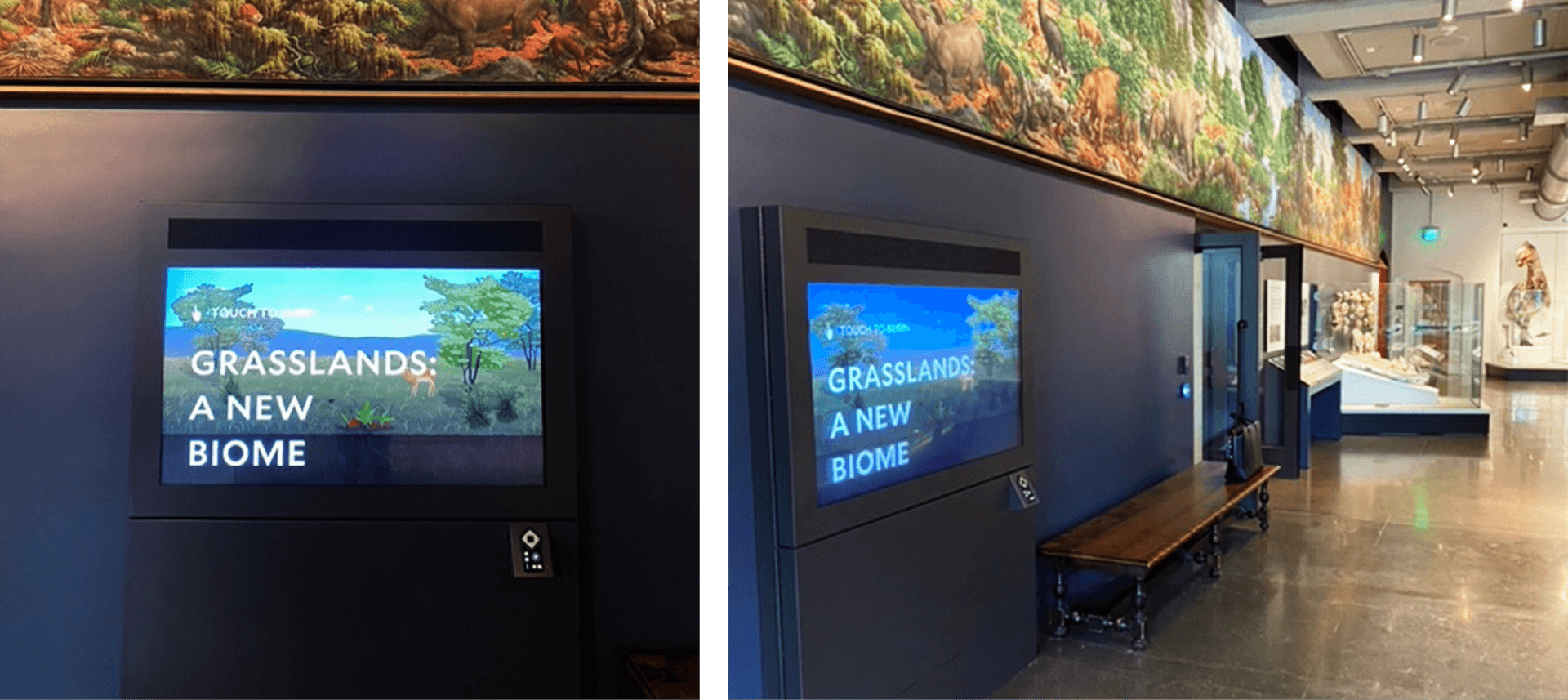
We recently built an interactive media experience talking about grasslands. Grassland biomes—whether African savanna, North American tallgrass prairie, Argentine pampas, or Eurasian steppe—are interesting because they’re relatively new (5 to 8 million years old, coming into existence at different times around the world), and because of their relationships with grass-eating animals, regional climate, and natural forces like fires. In our exhibit, the goal was to emphasize these relationships, rather than to provide a survey of grassland species.
The exhibit uses a landscape scene including grasses, trees, and grazing ungulates. We wanted to visually communicate information about such places simply but correctly, using examples that wouldn’t mislead visitors or disappoint experts. So, how would we choose which plants and animals to depict?
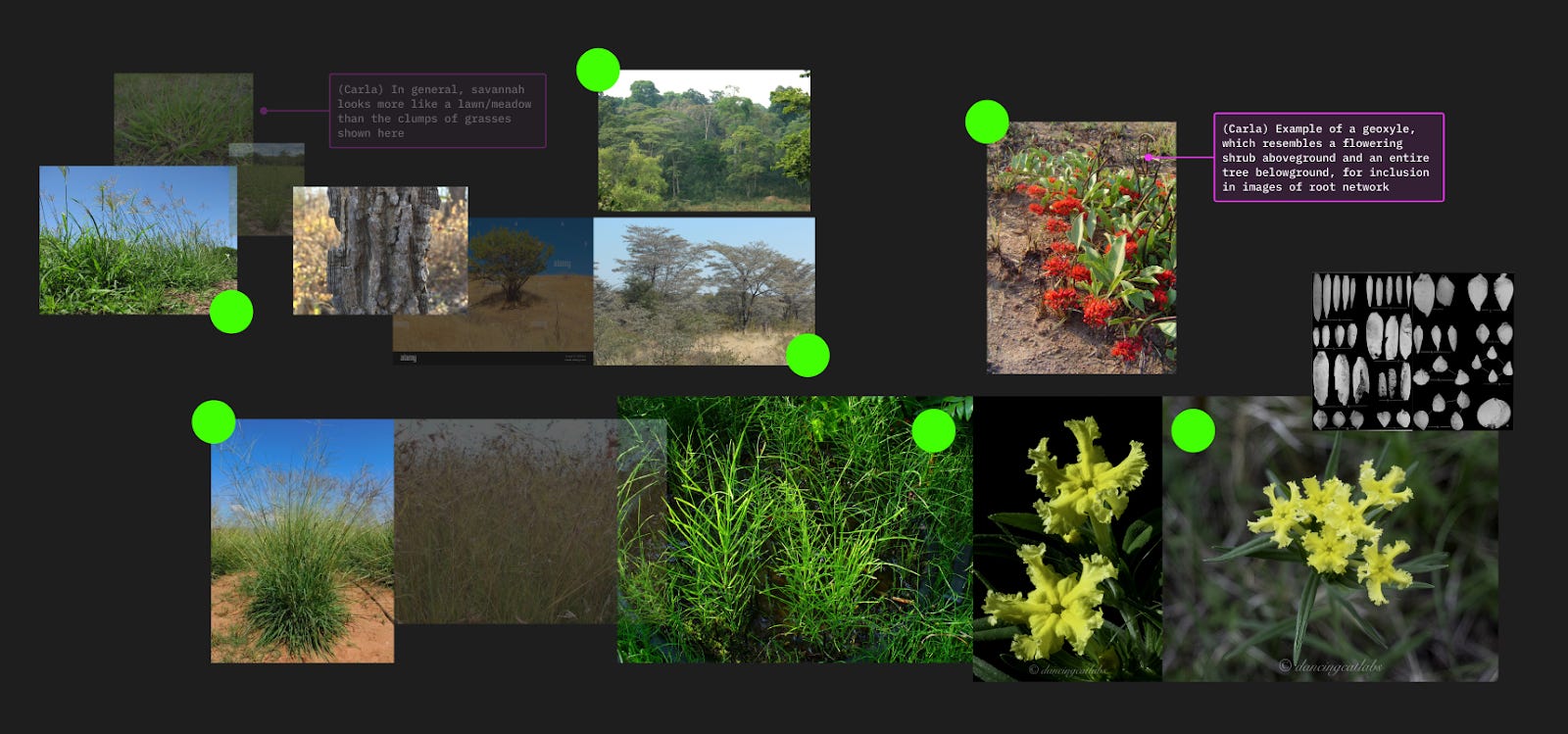
First, we picked a place and time: the North American Great Plains as they were 5 to 8 million years ago. We have extensive fossil evidence of plants and ungulates from that setting, as cataloged in the Kansas Geological Survey’s stratigraphic analysis of the Ogallala Formation. Better still, references for the plant life were abundant: ancient wild grasses basically look like modern wild grasses (to paraphrase a few grasslands experts), and some of the tree species—like the hackberry—are still around today.
But the animals were more complicated. The fossil evidence showed who was there at the time, but not what they ate for lunch. Fossil teeth give some information about animal diets, like carnivory versus herbivory, but feeding styles—like grazing versus browsing—aren’t necessarily apparent.
For our next step in working out who we’d be showing on this prehistoric plain, we turned to a 2020 ecomorphological study by Nuria Melisa Morales-García, Laura K. Säilä, and Christine M. Janis. Ecomorphology details how an animal’s shape influences and is influenced by its environment. For example, plain-dwelling grazers (which eat grasses) tend toward broader jaws and longer legs, while forest-dwelling browsers (which eat leaves and fruit off of trees and bushes) have narrower jaws—consider a sheep versus a goat. In the study, Morales-García et al. compared 42 animals from the late Miocene (2 to 18 million years ago) to 22 modern African savanna animals to figure out the feeding styles of the ancient animals. Using eight different anatomical parameters that reflect or are affected by an animal’s diet, feeding style, and habitat, Morales-García et al. plotted all 64 species across time in an eight-dimensional cube. Then they simplified that to a 3D cube, for ease of presentation and comprehension.
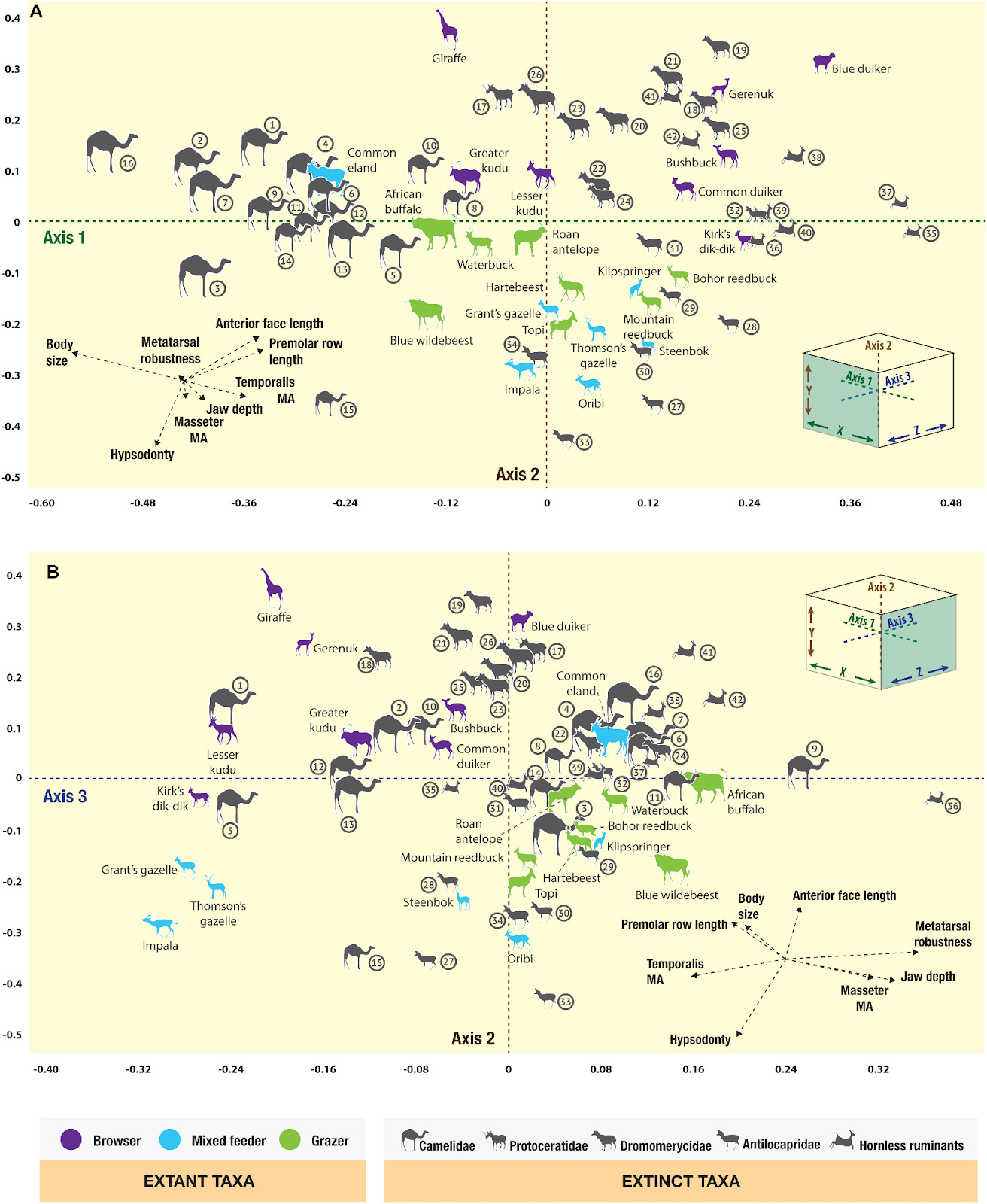
The modern ungulates can be classified as browsers, grazers, or mixed feeders. Those designations guided Morales-García et al. in dividing the cube of beasts into different regions. (We loved the idea of the Beast Cube; it’s become an affectionate nickname for the data visualization.) The ancient animals’ positions relative to those of modern animals indicated how much those animals’ feeding styles may have overlapped.
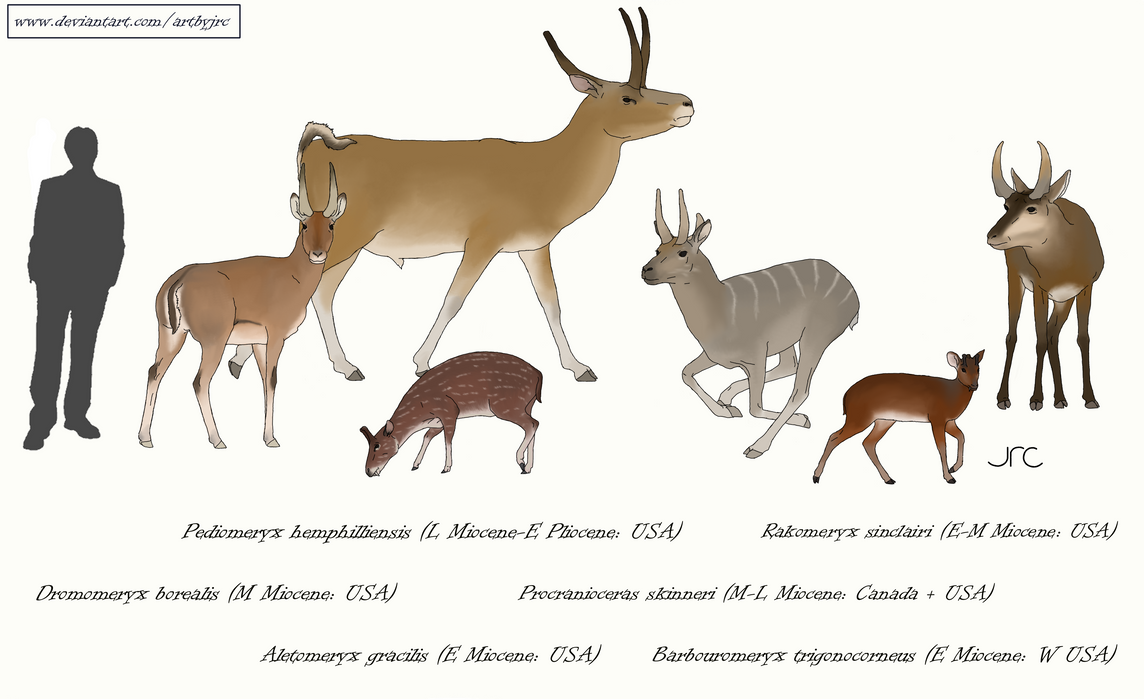
The work of Morales-García et al. provided us with a list of six candidate mammals who were probably grazers. Of those six, three were from our targeted time range–two camelids (the Great Plains had a lot of these!) and a horned deer-like creature. That took care of our animal casting for the scene.
We ended up using a different place and time for the exhibit, but this research gave us guides for determining which components were most important to get right. This came in handy when we settled on an illustrated style for our landscape: we weren’t aiming for strict realism or exact species, but the scene’s characters—both plant and animal—still had recognizably correct features that supported the relationships we wanted to show.
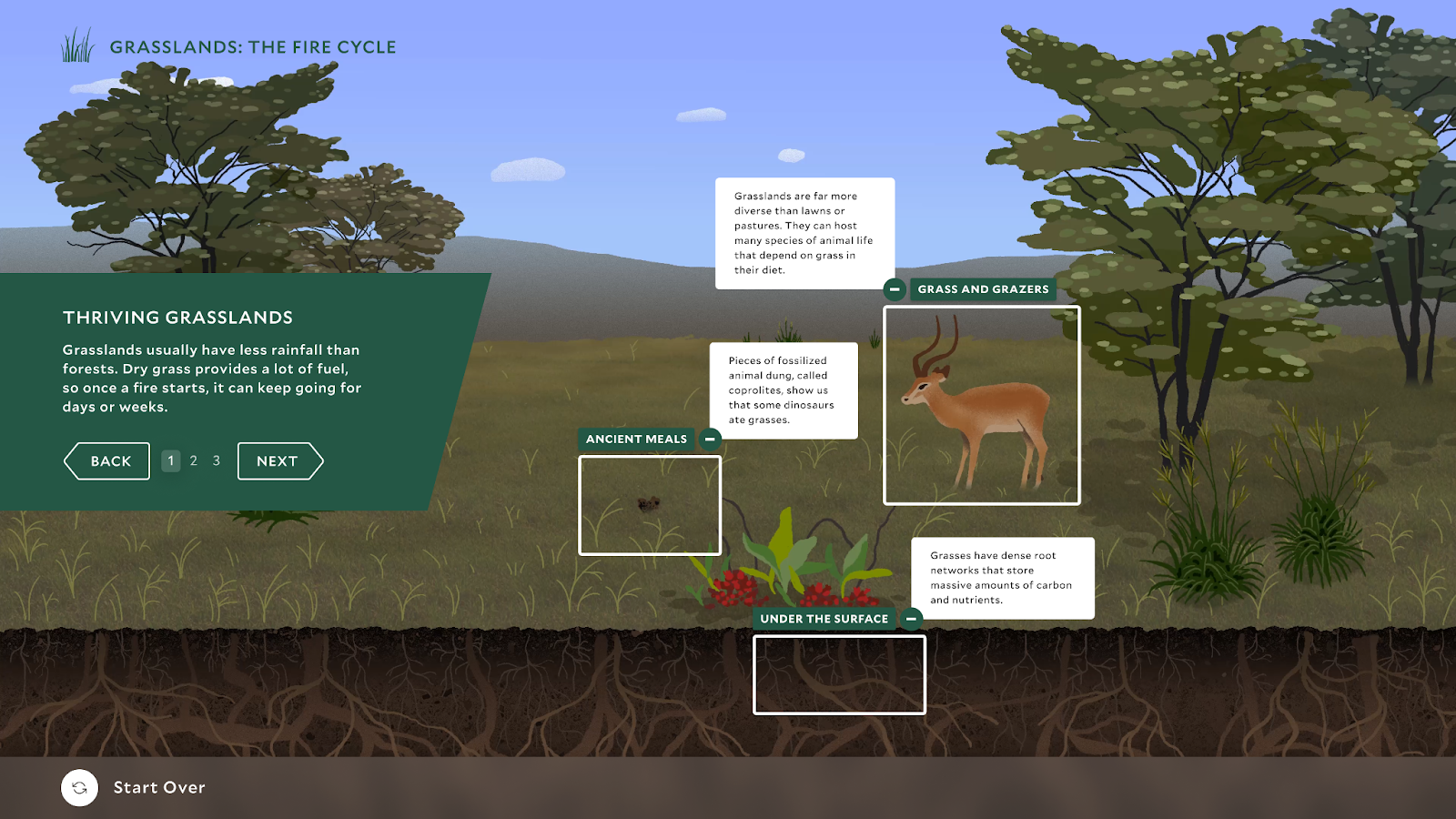
The exhibit makes a broad point about the roles of both living things and nonliving forces in shaping and maintaining ecosystems, whether in the late Miocene or the modern world. Our approach lets us focus on communicating the general trends for a layperson to understand, while preserving accuracy to reflect subject experts’ knowledge. This is especially important in a museum environment, where the audience includes both experts and the general public; in the design process for this exhibit, the uncertainty of prehistoric animal behavior was a further complicating factor. Our research helped us create an interactive that uses simple, vivid, and accurate visual information that keeps the focus where we want it.